
Recent Houston security incidents offer property owners a practical reason to review their security—not to create fear, but to identify vulnerabilities before they become costly problems.
Security risks can develop around apartment parking areas, commercial buildings, warehouses, residential communities, construction sites, entrances, gates, and equipment areas. Often, the issue is not one major weakness but several smaller gaps working together: poor lighting, unsecured access points, camera blind spots, or no after-hours security presence.
For Houston property owners, the takeaway is simple: effective property security combines visibility, access control, technology, trained personnel, maintenance, and a clear response plan.
What Recent Houston Security Incidents Reveal About Property Security
Recent Houston security incidents demonstrate why property owners should look beyond the main entrance when evaluating their security.
For example, Houston businesses have recently dealt with theft and property-related incidents involving vulnerable equipment and parking areas. These situations highlight an important point: valuable assets are not always inside a locked building. Equipment, vehicles, loading areas, garages, storage spaces, and perimeter locations can also attract unwanted activity.
This is why property security Houston owners need should begin with a complete assessment of the property.
Ask practical questions:
- Can someone enter the property without being noticed?
- Are parking areas adequately monitored?
- Are cameras covering important access points?
- Are there dark areas around the building?
- Can landscaping create hidden areas?
- Are gates and restricted entrances properly controlled?
- Who responds if suspicious activity occurs after business hours?
Houston Police Department’s Crime Prevention Through Environmental Design (CPTED) guidance emphasizes natural surveillance, access control, territorial reinforcement, and property maintenance. These principles can help owners design and maintain environments where suspicious activity is easier to notice and unauthorized access is more difficult. Houston Police Department CPTED guidance
Common Security Weaknesses Property Owners Should Check
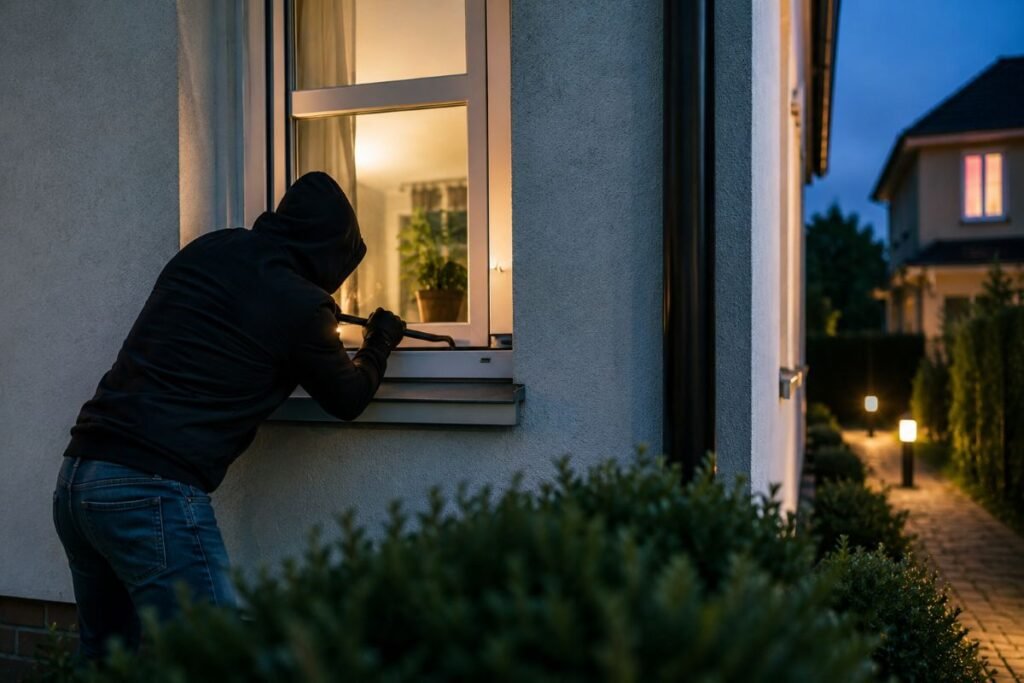
A good security review should cover the entire property rather than focusing only on cameras or alarms.
Poor Lighting
Dark parking lots, walkways, entrances, loading zones, and side areas can reduce visibility. Property owners should inspect lighting at night and replace failed fixtures promptly.
Unsecured Entrances
Side doors, service entrances, gates, emergency exits, and other secondary access points can be overlooked. Review who has access and whether locks, gates, and access systems are functioning correctly.
Camera Blind Spots
Having cameras does not automatically mean having complete coverage. Check whether cameras can clearly monitor entrances, parking areas, gates, valuable equipment, and other vulnerable locations.
Unmonitored Parking Areas
Parking lots and garages can require additional attention, particularly during overnight and low-occupancy periods. Review lighting, surveillance, access control, and patrol requirements.
Poor Landscaping and Visibility
Overgrown bushes, trees, walls, dumpsters, and other obstructions can create visual barriers. Maintaining clear sightlines supports natural surveillance.
Lack of After-Hours Presence
A property may have cameras and alarms but still lack immediate human observation. Depending on the property’s risk profile, scheduled patrols or security personnel may provide an additional layer.
Why Security Cameras Alone May Not Be Enough
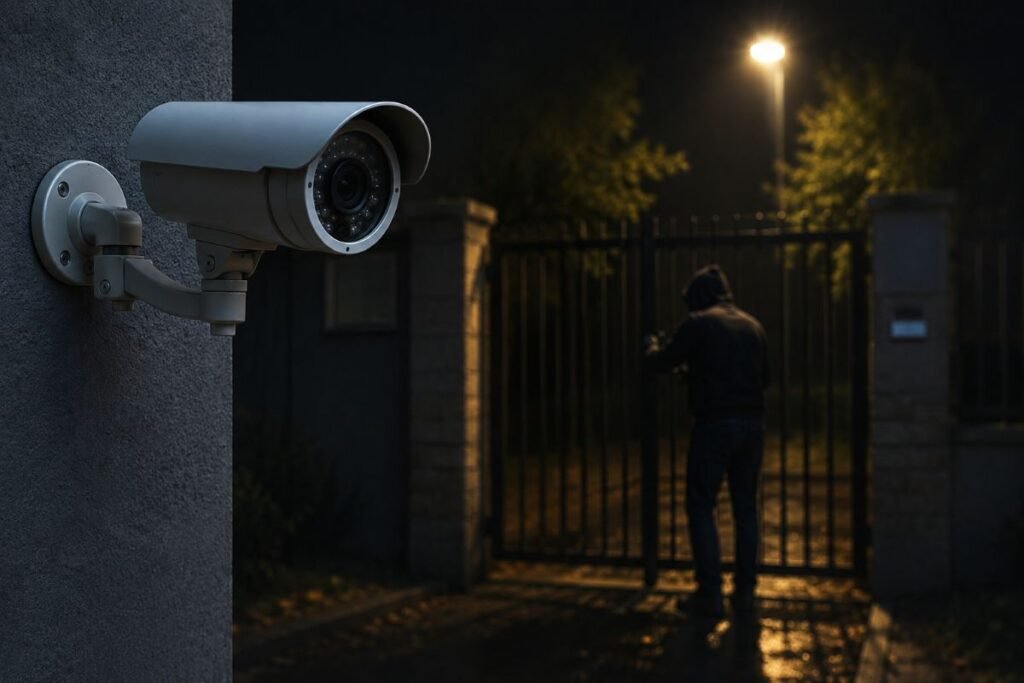
Security cameras are useful for detection, documentation, and deterrence, but they are only one component of a complete security strategy.
A camera can capture activity. An alarm can notify someone that an event may have occurred. Neither necessarily provides an immediate physical presence at the property.
This is where professional Houston security services can complement technology.
For example, a commercial property could combine:
- Security cameras
- Controlled entrances
- Adequate exterior lighting
- Alarm systems
- Scheduled patrols
- Trained security personnel
- Incident-response procedures
Security guards are not a guarantee against crime, but a trained on-site or mobile security presence can add observation, reporting, access-control support, and a visible deterrent where appropriate.
The right combination depends on the property’s location, layout, operating hours, occupancy, assets, and identified vulnerabilities.
Practical Security Measures for Property Owners
Property owners do not necessarily need to replace their entire security system. Start by addressing the highest-risk areas.
1. Conduct a Property Security Assessment
Walk the property during both daytime and nighttime hours. Look for poorly lit areas, unsecured entrances, blind spots, vulnerable equipment, and locations where unauthorized activity could go unnoticed.
2. Improve Lighting and Visibility
Install or improve lighting around entrances, walkways, parking areas, gates, loading zones, and perimeter areas. Keep vegetation trimmed so cameras and people have unobstructed sightlines.
3. Secure Vulnerable Access Points
Review doors, gates, fences, service entrances, and restricted areas. Remove unnecessary access permissions and ensure former employees, contractors, and other authorized users no longer have inappropriate access.
4. Review Camera Placement
Evaluate what cameras actually capture rather than simply counting how many are installed. Check entrances, parking areas, equipment locations, gates, and other vulnerable points.
5. Monitor Parking and High-Risk Areas
Parking garages, lots, storage areas, and exterior equipment can require additional attention. Consider whether patrols, access controls, lighting, or additional cameras are appropriate.
6. Create an Incident-Response Procedure
Employees and property managers should understand what to do when they see suspicious activity, discover damage, receive an alarm notification, or identify unauthorized access.
7. Consider Professional Security Patrols
Where appropriate, security guard services Houston property owners use can provide scheduled patrols or on-site personnel. The service should be designed around the property’s specific risks rather than applying the same security plan to every location.
Build a Layered Security Strategy
Effective Houston property security should not depend on one technology, one guard, or one security measure.
A layered approach might look like:
Property design → lighting → access control → cameras and alarms → trained personnel → incident response → ongoing maintenance
Each layer addresses a different vulnerability.
For example, good lighting improves visibility. Access control limits unauthorized entry. Cameras help document activity. Security personnel can provide physical observation and reporting. Maintenance keeps visibility and security features working as intended.
CPTED principles from the Houston Police Department also support this approach by emphasizing natural surveillance, access control, territorial reinforcement, and maintenance. Houston Police Department CPTED Resource
For apartment communities, the strategy may focus heavily on parking, gates, visitor access, and common areas. For commercial properties, loading docks, employee entrances, inventory areas, and after-hours access may receive greater attention.
Internal Security Resources for Houston Property Owners
Property owners evaluating their options can explore related security solutions based on their specific needs:
- Security Guard Companies in Houston Texas
- Armed Security Guard in Houston
- Unarmed Security Guard in Houston
- Mobile Patrol Services in Houston
- Commercial Security Services in Houston
These internal pages can help visitors move from general property-security information to specific services relevant to their location and risk profile.
Conclusion
Recent Houston security incidents should be treated as an opportunity to review vulnerabilities—not as a reason to panic.
Property owners, landlords, apartment managers, and business operators can reduce avoidable weaknesses by improving lighting, securing access points, reviewing camera coverage, maintaining clear sightlines, monitoring parking areas, establishing response procedures, and considering professional security support when appropriate.
The goal is not to promise a crime-proof property. The goal is to make the property more visible, controlled, monitored, and prepared.
A security assessment completed today may reveal a simple improvement that is much easier and less expensive to address before an incident occurs.