
When people see a security guard sitting at a desk, standing near an entrance, or walking around a property, it can be easy to assume the job is simply about “watching.” In reality, what does a security guard do during a normal shift involves much more than standing at a gate or monitoring a doorway.
A typical shift can include reviewing previous incidents, checking access points, monitoring people and property, conducting patrols, watching CCTV, answering questions, identifying safety concerns, responding to incidents, communicating with management, and completing detailed reports.
The exact security guard duties depend on the assignment. A guard at an apartment community may spend much of the shift managing visitors and checking common areas, while a construction-site guard may focus on perimeter security, equipment, gates, and unauthorized access.
The common thread is continuous awareness and prevention. Guards are expected to notice changes, follow established procedures, communicate clearly, and take appropriate action when something requires attention.
What Does a Security Guard Do During a Normal Shift?
A security guard’s shift generally follows a structured routine, but no two shifts are necessarily identical.
Some of the most common security guard daily responsibilities include:
- Receiving a shift handover from the previous guard
- Reviewing the security logbook and recent incidents
- Checking radios, phones, access-control equipment, and other assigned equipment
- Inspecting entrances, exits, gates, doors, and restricted areas
- Monitoring employees, residents, visitors, contractors, and deliveries
- Conducting scheduled or randomized patrols
- Monitoring CCTV cameras and alarms when assigned
- Responding to suspicious activity or security concerns
- Reporting maintenance and safety hazards
- Assisting with emergencies according to training and site procedures
- Communicating with supervisors, property managers, or emergency services when appropriate
- Recording incidents and unusual observations
- Completing a final patrol and shift handover
A guard’s responsibility is not necessarily to intervene physically in every situation. Professional security work often centers on observation, deterrence, communication, documentation, and following established procedures.
The Typical Start of a Security Guard’s Shift
The first part of a shift is important because it establishes what has happened recently and what needs attention.
A guard normally begins by receiving a shift handover. The outgoing officer may explain anything unusual that occurred, such as a malfunctioning gate, an expected contractor, a visitor restriction, a maintenance issue, or an incident that needs follow-up.
The incoming guard may then review the security logbook or electronic reporting system.
This can reveal details such as:
- Recent incidents or disturbances
- Unusual visitors or vehicles
- Equipment problems
- Doors or gates requiring attention
- Deliveries expected during the shift
- Areas requiring additional patrols
- Instructions from management
The guard may also check assigned equipment, including a radio, flashlight, access-control device, keys, or other site-specific equipment.
This initial review matters because a guard should not begin a shift without understanding the current security situation.
Monitoring People, Property, and Activity
One of the most important duties of a security officer is maintaining situational awareness.
That does not mean staring at everyone who enters a property. It means understanding what normal activity looks like and noticing when something appears inconsistent with it.
For example, at an office building, a guard may become familiar with normal employee arrival patterns. If someone attempts to enter through a restricted door late at night, that behavior may require additional attention.
At an apartment community, the guard might notice:
- An unfamiliar vehicle repeatedly entering restricted areas
- Someone attempting to access a locked facility
- A propped-open security door
- Unusual activity around parking areas
- A visitor trying to enter without proper authorization
The guard’s response should depend on the property’s procedures, the circumstances, and their training.
In many situations, simply identifying an issue early and communicating it to the appropriate person can help prevent a minor concern from becoming a larger problem.
Regular Security Patrols
Patrolling is another major part of many security guard shift duties.
A patrol gives the officer an opportunity to physically inspect areas that cannot be adequately monitored from a desk or CCTV station.
Depending on the property, patrols may involve checking:
- Building entrances and exits
- Emergency doors
- Parking lots and garages
- Perimeter fences
- Gates
- Stairwells
- Hallways
- Storage areas
- Restricted zones
- Construction materials and equipment
- Common areas
- Exterior lighting
- Potential safety hazards
For example, a guard walking through a commercial property might discover that an exterior door has not fully closed. At a construction site, a patrol might reveal a damaged section of fencing.
These observations may appear small, but documenting and communicating them can be an important part of preventive security.
Patrol schedules can also vary. Some assignments require regular scheduled rounds, while others use varying patrol patterns depending on the site’s security plan.
Access Control and Visitor Management
For many security officers, access control is one of the most visible parts of the job.
A guard may be responsible for controlling who enters or leaves a property and ensuring that access procedures are followed.
This can involve checking:
- Employee identification
- Visitor credentials
- Contractor authorization
- Delivery information
- Vehicle access
- Visitor appointments
- Restricted-area permissions
Imagine a contractor arrives at an office building claiming to have an appointment with a company employee. Rather than simply allowing access, the guard may verify the person’s identity and authorization according to the site’s procedures.
At a residential property, a guard may help manage visitor entry while residents receive guests. At a construction site, the officer may verify workers and delivery vehicles before allowing them through the gate.
Good access control is about consistent procedures, not making arbitrary decisions.
CCTV and Security System Monitoring
Many security assignments include CCTV or other security systems.
A guard monitoring cameras may watch entrances, parking areas, hallways, loading zones, or other designated locations.
However, CCTV monitoring is not necessarily a passive activity.
The officer may need to:
- Watch for unusual activity
- Respond to an alarm notification
- Check an area after receiving a report
- Monitor restricted locations
- Communicate observations to another guard
- Document significant events
- Notify supervisors according to procedure
Technology is a useful security tool, but it does not replace human judgment. A camera may show that a door opened, for example, but the guard may need to determine whether the activity appears routine or requires further attention.
How Security Guards Respond to Problems
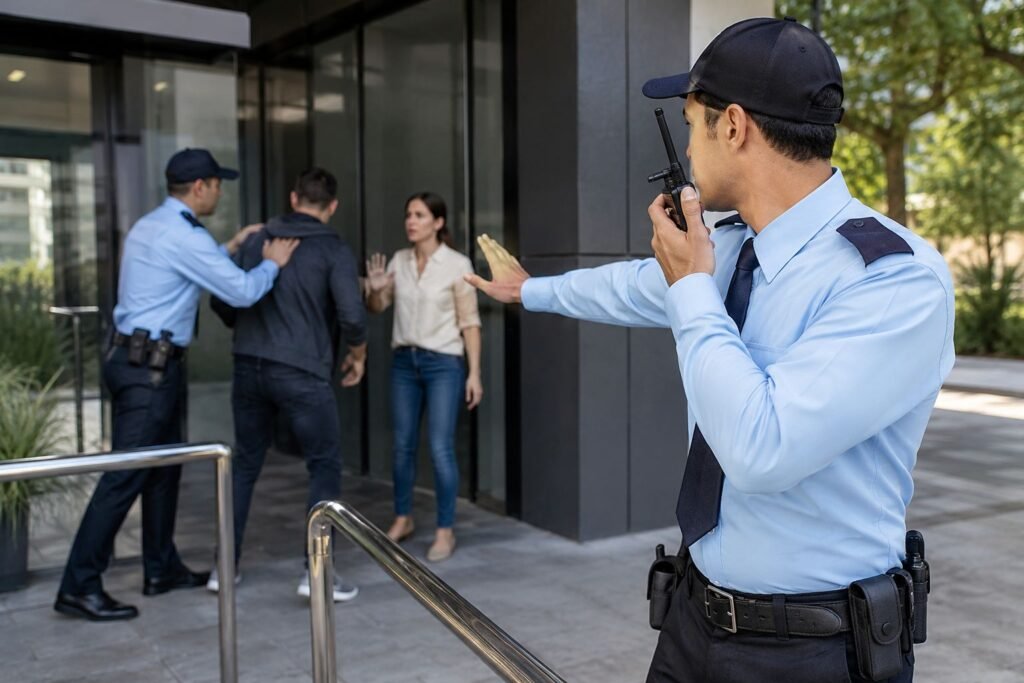
A major misconception about security work is that guards are expected to personally solve every problem.
In professional security operations, the response usually starts with assessment, communication, and following established procedures.
Unauthorized visitors
If someone attempts to enter an area without authorization, the guard may politely stop the person, verify credentials, contact the relevant employee or manager, and document the interaction.
Suspicious behavior
A guard may observe unusual behavior and increase monitoring, notify a supervisor, or follow the property’s escalation procedure.
Open or damaged doors
An unsecured door may create an access concern. The guard can check the area, secure the door when appropriate, and report the problem if maintenance is required.
Safety hazards
A spill, broken railing, poor lighting, exposed equipment, or another hazard may be reported to property management or the responsible department.
Arguments or disturbances
The appropriate response depends on the circumstances and site procedures. A guard may use verbal communication to help de-escalate a situation and contact supervisors or emergency services when necessary.
Medical emergencies
Security personnel may assist according to their training and assignment procedures, including contacting emergency responders and helping maintain access for emergency personnel.
Alarm activations
An alarm may require the guard to follow a specific response protocol, which could include checking designated areas, contacting the appropriate personnel, documenting the event, or coordinating with emergency responders.
The important point is that security guard responsibilities are not identical to those of police officers or emergency medical professionals. Guards operate within the authority, training, assignment instructions, and applicable laws governing their work.
Security Guard Responsibilities Change Throughout the Shift
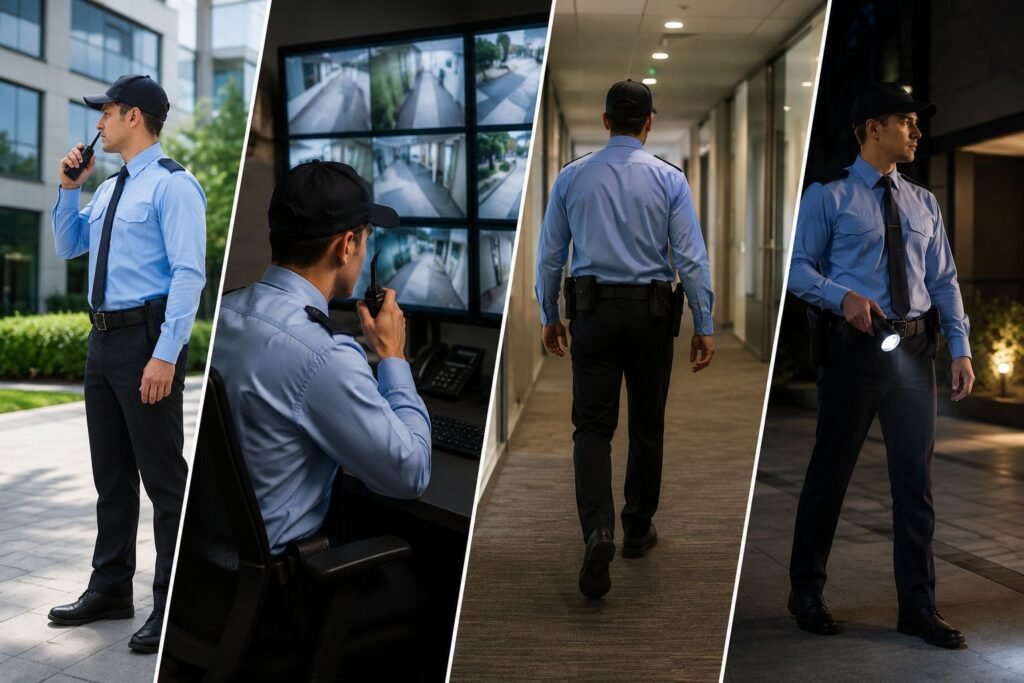
A security shift can be quiet for several hours and then become extremely busy within minutes.
That unpredictability is one reason professional security requires constant attention.
A typical shift might look like this:
Beginning of shift:
The guard receives the handover, reviews the logbook, checks equipment, and confirms current instructions.
Middle of shift:
The officer conducts patrols, monitors entrances, checks visitors, watches CCTV, and documents routine activity.
Unexpected event:
An alarm activates or a suspicious person is reported. The guard follows the site’s response procedure and communicates with the appropriate people.
Later in the shift:
The guard resumes regular monitoring and patrols while continuing to watch for new concerns.
End of shift:
The officer completes reports, updates the logbook, identifies unresolved issues, and briefs the incoming guard.
This is why describing security work as simply “standing around” misses a significant part of the job.
Security Guard Duties by Location
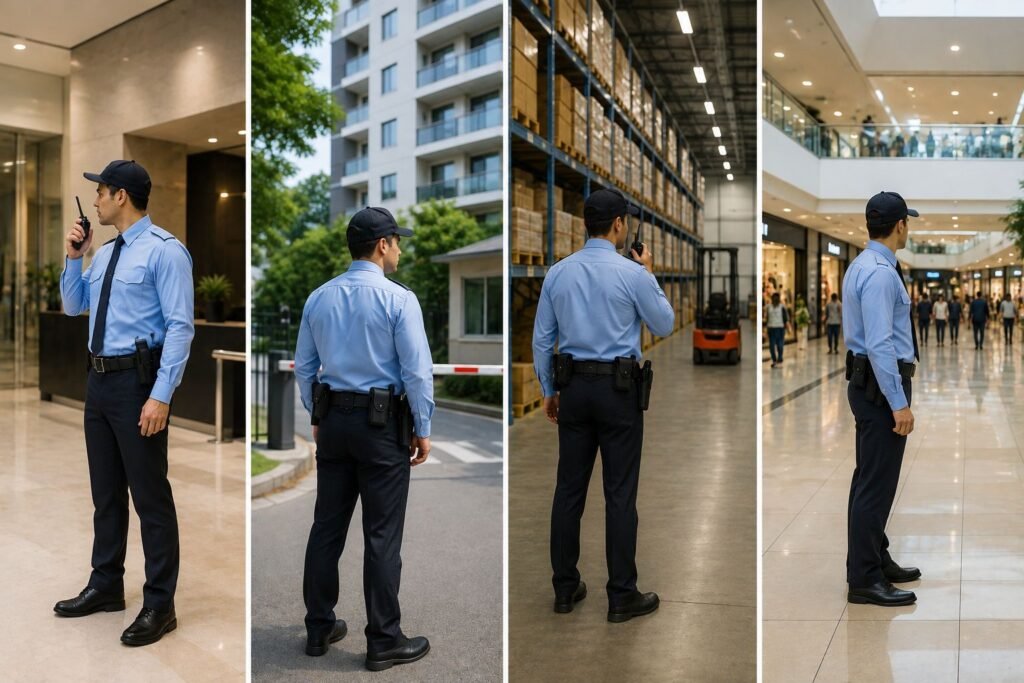
The daily routine of a security guard can change considerably depending on where they are assigned.
Commercial Security
Security officers at offices and commercial buildings may focus on:
- Employee and visitor access
- Lobby monitoring
- Parking areas
- Deliveries
- Building patrols
- After-hours access
- CCTV monitoring
- Emergency procedures
- Incident documentation
A commercial guard may also coordinate closely with reception staff, facilities teams, and property management.
Residential Security
Apartment and residential communities often require a different approach.
Common responsibilities include:
- Monitoring entrances and exits
- Managing visitor access
- Checking parking areas
- Patrolling common areas
- Watching for unauthorized access
- Reporting property damage
- Responding to resident concerns
- Monitoring gates and access systems
The goal is generally to maintain a controlled and orderly environment while providing a visible security presence.
Construction Site Security
Construction properties can contain valuable equipment, materials, tools, and partially secured structures.
Guards may check:
- Perimeter fencing
- Gates
- Equipment areas
- Material storage
- Worker access
- Delivery vehicles
- Restricted areas
- Signs of unauthorized entry
Night shifts can be particularly different from daytime assignments because normal construction activity may largely stop.
Hospital Security
Hospital security involves a unique combination of access control, visitor assistance, monitoring, patrols, and incident response.
Depending on the assignment, officers may monitor entrances, assist with visitor procedures, patrol facilities, respond to disturbances, and coordinate with hospital personnel during emergencies.
Because hospitals operate around the clock, security officers must be prepared for changing circumstances at any hour.
Hotel Security
Hotel security may involve:
- Lobby and entrance monitoring
- Guest assistance
- Parking-area patrols
- Access control
- Monitoring restricted areas
- Responding to disturbances
- Checking common areas
- Supporting emergency procedures
Hotels can be especially dynamic because guests, staff, deliveries, and events create constantly changing activity.
Event Security
At concerts, conferences, sporting events, and private functions, security priorities can change rapidly.
Officers may be assigned to:
- Entry points
- Ticket or credential checkpoints
- Crowd areas
- VIP or restricted sections
- Back-of-house areas
- Parking
- Emergency exits
Event security requires communication and coordination because large numbers of people can move through an area within a short period.
What People Often Don’t See During a Security Guard’s Shift
Some of the most important security work happens without attracting attention.
A guard might spend significant portions of a shift documenting observations, communicating with management, checking systems, reviewing instructions, and completing reports.
Documentation is particularly important.
An incident report may record:
- What happened
- When it happened
- Where it happened
- Who was involved, when appropriate
- What the officer observed
- What actions were taken
- Who was notified
- What happened afterward
Accurate reporting creates a record that property managers and supervisors can review later.
Communication is equally important. A security officer may need to communicate with other guards, supervisors, reception personnel, maintenance teams, property managers, or emergency responders depending on the situation.
These behind-the-scenes activities are a major reason experienced officers can provide value even when nothing dramatic happens during a shift.
Why Professional Security Guards Are Important
The value of professional security is not simply whether a guard catches someone doing something wrong.
A trained security officer can provide a consistent presence, identify potential concerns, enforce established access procedures, communicate problems, document incidents, and support an organized response when something unexpected occurs.
Effective security is often preventive.
For example, identifying an unsecured entrance during a routine patrol may allow the issue to be corrected before it becomes a larger concern. Noticing a damaged fence can prompt repairs before unauthorized access becomes easier.
Of course, no security service can guarantee that every incident will be prevented. Security effectiveness depends on the property, staffing, procedures, technology, training, risk environment, and many other factors.
For businesses and property managers, the right approach is to assess the actual risks of the location and choose professional security guard services that match the assignment.
Conclusion
So, what does a security guard do during a normal shift?
Much more than simply standing at an entrance.
A typical shift can involve handovers, logbook reviews, access control, visitor management, patrols, CCTV monitoring, safety inspections, communication, incident response, documentation, and coordination with property management.
The exact responsibilities vary by location and assignment. A guard protecting an apartment community will have different priorities from an officer working at a hospital, construction site, hotel, office building, or event.
What remains consistent is the need for attention, professionalism, good communication, accurate reporting, and the ability to follow established security procedures.
For businesses, property managers, and event organizers, understanding these responsibilities makes it easier to determine what type of security coverage is actually needed. Instead of viewing security as simply having someone present, it is better to consider the specific risks, access points, operating hours, property layout, and level of monitoring required.
When those needs are assessed properly, professional security services can become a practical part of a broader security strategy.
6. FAQs
1. What does a security guard do during a normal shift?
A security guard may monitor people and property, control access, conduct patrols, watch CCTV, respond to incidents, report hazards, communicate with management, and complete security documentation.
2. Do security qguards work only at entrances?
No. Depending on the assignment, guards may patrol buildings and outdoor areas, monitor cameras, manage visitors, inspect restricted areas, check parking facilities, and respond to incidents.
3. What happens during a security guard shift when nothing goes wrong?
A quiet shift still involves active monitoring, patrols, access control, equipment checks, documentation, and looking for unusual activity or safety concerns.
4. Do security guards respond to emergencies?
They may respond according to their training and site procedures. This can include contacting emergency services, securing an area, communicating with management, assisting with evacuation procedures, or providing other appropriate support.
5. Are security guard duties the same at every property?
No. Responsibilities vary based on the property’s type, size, risk level, operating hours, security plan, guard training, assignment instructions, and applicable regulations.